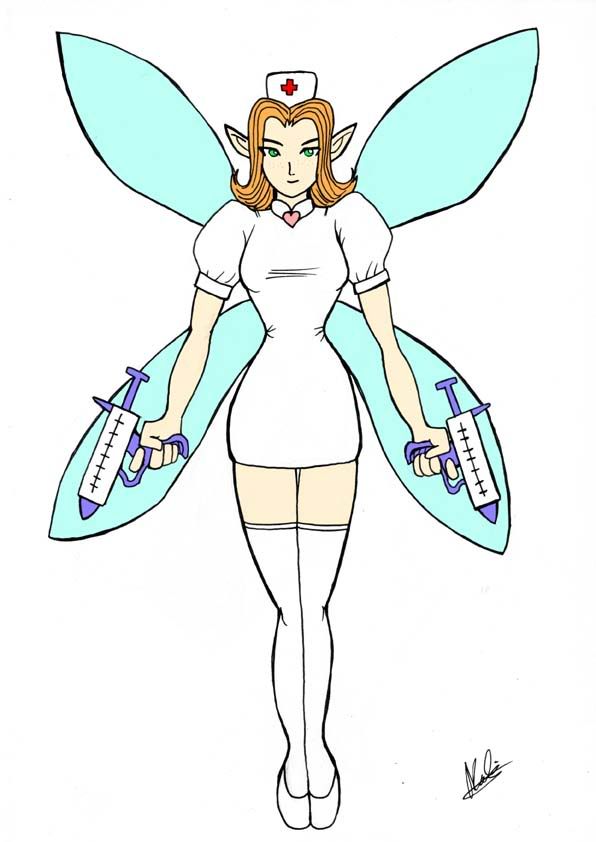
What is animism? No it's not the worship of superpowered, , 2-dimenional, vaguely oriental huge-eyed people. Animism is the belief that every non-human thing is a supernatural being or at least possesses a spirit or soul. It is a belief that is prevalent in most indigenous and folk religions including Shinto, and some forms of Hinduism, Buddhism, Pantheism, Christianity and Neopaganism.
An occult-artist blogging about the counter-cultural, the esoteric, the paranormal, comics, movies and other stuff but most of the time, it focuses on the weird and awesome.
Monday, September 19, 2011
Urban Animism
What is animism? No it's not the worship of superpowered, , 2-dimenional, vaguely oriental huge-eyed people. Animism is the belief that every non-human thing is a supernatural being or at least possesses a spirit or soul. It is a belief that is prevalent in most indigenous and folk religions including Shinto, and some forms of Hinduism, Buddhism, Pantheism, Christianity and Neopaganism.
Friday, September 16, 2011
Weh-Oh-Weh! Lico's Shamanic Approach to His Chaos Magic
Another throwback to atavistic magick I do is the use of a wooden toy snake for healing. According to Nick Hall's Chaos and Sorcery, live snakes were used as wands for healing the afflicted. Although I'm sure it's a psychosomatic effect but I definitely feel better when I use the wooden snake. I just hope Samuel L. Jackson doesn't find out. He's not so fond of snakes.
So yeah... shamanism. I think it's cool. As for hallucinogenics, I don't think I'd be ingesting peyote. Besides, I'm like I'm high all the time. Herbalism? The only herbs I'd more likely to collect are the ones in KFC's original. Below is a reenactment of an actual shamanic experience caused by the ritualistic consumption of fried chicken.
Friday, July 15, 2011
Operation: Divinity Gauntlet
Operation: Divinity Gauntlet is the codename for my magical operation for The Manifestation of Glory.
What is The Manifestation of Glory?
The Manifestation of Glory (or TMOG for short) is a concept and practice originated from the chaos magic group Domus Kaotica. It is a one-year make-over that involves special physical, mental and spiritual training all at the same time. It is a magical “born again” operation that promotes rejuvenation and self-evolution. It is a way to recreate yourself in your own likeness.
How do you do TMOG?
Methods of TMOG vary in individuals but the core idea is that you must go through a special regimen that enhances your mind, body and soul. For example, on the physical side, you could exercise and practice healthy habits. On the mental side, you could read more books and study foreign languages. On the spiritual side, you could meditate and practice energy work. The point is that within one year there must be significant changes in the individual on the path to TMOG. Some discipline and effort are required to ensure success in TMOG.
What are you up to so far?
So far, I’ve been taking longer walks, restricting my eating habits and practicing acupressure plus longer periods of reiki on myself. At the same time, I’m studying various books (especially religious scriptures and classical novels), taking up watercolor painting and practicing certain metaphysical techniques a bit more often.
Also, I'm posting this unrelated video.
Monday, June 27, 2011
Hoodoo To Do
Before I start discussing, let me differentiate the difference between hoodoo and Voodoo. Voodoo is the religion, hoodoo is a magical tradition. I hope that will clear up the confusion.
So far, hoodoo is doing me some good. There's one thing I observed why this African-American folk magic tradition is working so well for me. I notice that every time I make a mojo bag, I get in a trance-like state chaotes and other occultists call gnosis. Gnosis is one important key in magical practice that can make or break the spell. In my mind, I know that I'm not merely mixing herbs and spices. Luckily, I have no problem getting into a sorcerous mood and convincing myself that I'm working magic. When I make the mojo bags, everything else around me seems to cease to be. It's just me and the hoodoo work.
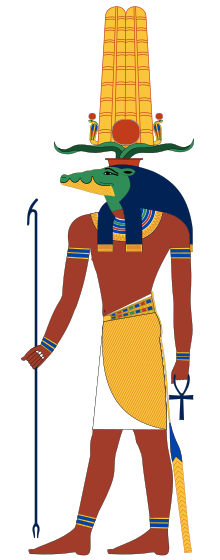
The same goes for I use novenas and recite the Psalms. Unfortunately, I had to stop due to some strange and awkward experience. Luckily, thanks to my chaos magic practice, I was able to infuse the energies of the Psalms with the energies of my own invocations to my patron god Sobek. So far, things are going well with the Sobekian spells I now recite.
So this is my latest update in my hoodoo practice and experimentation. So far, my specialties are mojo bags and (stopped for now) Psalms magic. The next thing you know, I'd be creating zombies. Mwahahahahaha!!!
Saturday, June 25, 2011
The Sobekian Primer
What is Sobekianism?
Sobekianism is a religion dedicated to the worship of the crocodile god Sobek and other gods of Kemetic (Ancient Egyptian) origin. It is not a reconstructed Kemetic religion. Sobekianism is a modern belief system with a strong emphasis on eclecticism.
Who is Sobek?
Sobek (also known as Sebek, Suchos and Sobek-Ra) is the Crocodile God, Lord of The Waters and the supreme patron god in Sobekianism. Sobek is the benevolent god of crocodiles, water, power and fertility. He also represents the primordial forces in nature that shape the world.
Which other deities are honored in Sobekianism?
Although all deities can be worshipped in Sobekianism, gods and goddesses connected to Sobek are most honored. The following deities are quite notable in Sobekianism:
- Hathor: wife of Sobek, cow goddess of joy, love, fertility and fun.
- Khonsu: son of Sobek and Hathor, god of the moon, traveling and youth. Together with Sobek and Hathor, they form the Sobekian Triad.
- Nit: mother of Sobek and the wisest of the Kemetic gods. She is a warrior goddess and a matron of craftsmen.
- Amun: the past incarnation of Sobek. He was a very powerful god who mysteriously disappeared after the creation of the universe.
- Ra: father-in-law of Sobek and father of Hathor. He is the sun god in Kemetic religion. His name is of great importance in Sobekian rituals. Also known as Re.
- Horus: warrior god, god of vengeance and friend of Sobek. Also known as Heru.
- Isis: goddess of magic, mother of Heru. Sobek assisted in the birth of Heru. Also known as Aset.
- Osiris: god of the underworld, husband of Isis, father of Horus. Sobek assisted in his resurrection after being murdered by the dark god Seth. Also known as Asar.
- Renenunet: second wife of Sobek, cobra goddess of magical names and fertility. She is a powerful sorceress who’s very cunning yet very benevolent.
- Tawaret: third wife of Sobek, hippopotamus goddess of protection, pregnancy and restraining evil forces. She is a strong warrior goddess who adores mothers and children.
- The Petsuchos – They are the sacred crocodiles that serve Sobek. Worshipped in Ancient Egypt, now they have a special place in the Sobekian afterlife as guardians of the dead.
What are the basic tenets of Sobekianism?
To, at least, grasp the greatness of Sobek is to emulate the positive qualities of the crocodile. The crocodile is an ancient beast, a survivor from the age of the dinosaurs. It is even considered as a living dinosaur. The crocodile is a symbol of power, primal forces, ancient knowledge, fertility and survival. Its ferocity and cunningness are qualities worth developing if used correctly. Sobek represents the crocodile in its most divine incarnation.
In Ancient Egypt, sacred crocodiles were kept in private lakes. They were adorned with jewelry and fed with cakes, bread and roasted meat. Sobek teaches that we should enjoy good food, nice things to wear and other fine things in life. In other words, eat, drink and be merry! The ideal Sobekian is a noble savage, an atavistic mage and a warrior hedonist all rolled into one.
What is the afterlife like for Sobekians?
One great thing about Sobekianism is that its concept of the afterlife is radically different from the typical afterlife of the Kemetists. Instead of going through elaborate funerary rituals and facing numerous perils in the afterlife before reaching Amenti (the Egyptian heaven), worthy Sobekians are protected by the sacred crocodiles Petsuchos and led to a marvelous version of the Nile River called the Heavenly Nile.
On the shores of the Heavenly Nile, a huge and endless celebration is being held. All sorts of delicious food are being served, everyone is wearing fantastic jewelry and beautiful women (plus men) are everywhere. Music, games and dancing fill the whole riverside. Lording over everything is the crocodile god Sobek. Along with his favorite wife Hathor, he makes sure that everyone is having a great time. That is a true paradise for followers of Sobek.
What is the punishment for unworthy people in the Sobekian afterlife?
If that person is deemed too unrepentantly evil to enter the Heavenly Nile, Sobek will devour that person. To avoid this terrible fate, the ever universal Golden Rule must be followed: Do to others what you’d like them to do to you. In other words, don’t be an asshole. Follow the Golden Rule and you might be worthy enough to enter the Heavenly Nile.
What are the rituals in Sobekianism?
Party of the beauty of Sobekianism is its strong advocacy on eclecticism inspired by chaos magic. Sobekians are encouraged to create their own prayers and rituals to honor the Crocodile God. If they wish to, they can even make their own Sobekian spells to attract special needs. However, the most basic and fundamental practice that all Sobekians must perform daily is the chanting of the holy name SOBEK-RA. Sobek-Ra is Sobek’s most powerful form especially when empowered by the power of the sun. Chanting SOBEK-RA invokes the power of the Crocodile God and attracts his blessings. The holy name must be chanted at least three times. At the end of every prayer, the holy name must be chanted three times to further empower the prayer. Chanting SOBEK-RA is a must for the faithful Sobekian.
Is there a church or temple Sobekians can worship in?
As of now, there are no temples. However, Sobekians are encouraged to meet up, worship and discuss anything related to the Crocodile God. In dire circumstances, Sobekians must band together for survival just like the ancient reptilian beasts.
Is there a priesthood in Sobekianism?
Sobekians are their own priests. They are their own pharaohs. Sobekians have no need for such antiquated authority figures to govern them. Sobekians govern themselves. However, in certain circumstances, leaders (in a more secular sense) are made to make things easier. Mentors may also be assigned to guide newer Sobekians in the ways of the croc.
Why become a Sobekian?
Imagine yourself as Conan the Barbarian and Sobek is your Crom. One reason that makes Conan a great warrior and leader is his devotion to his god Crom. Sobek is like Crom but more fun and with a lot of style. You too can unlock your inner crocodile and become more awesome than ever. If you have an affinity for reptiles and Egyptian gods, Sobekianism is for you. If you immensely enjoy good food and nice clothing, Sobekianism is for you. If you’re looking for a religion fit for warriors and leaders, Sobekianism is for you. However, if you don’t feel that it’s for you, do not fret. Sobek loves you anyway. Who knows? He might even invite you to the eternal party in the Heavenly Nile.
In brightest day and blackest night,
No evil shall escape my bite.
Let all enemies be filled with fright.
Beware my power – Sobekian might!
Sunday, June 12, 2011
The Hoodoo I Do
Glossary:
Thursday, June 9, 2011
WHAT MANNER OF TOMFOOLERY IS THIS!!??

The links in my adspace don't show occult stuff anymore and now they only show religio-christian ads. Well guess what? I'm not gonna have of that so to counteract this theocratic offensive attack of the pop media kind on my blog, I'm going to spam this post with random words related to my preferred fields. Ready... GO!
I feel better. Problem?
Wednesday, March 23, 2011
Sigil Onslaught!
On Trolls and Troll Magick

Among the fairies, my favorite is the troll. I could never relate with the more wholesome fairies like gnomes and sylphs but I feel myself very connected with the seemingly brutish and intimidating trolls. It's true that most trolls are not so pleasant when it comes to looks and their minds aren't that sharp. Some trolls are actually smart (though it's more of street-smart cunning than academic intelligence) and trollish women tend to be gorgeous. In fact, there has been legends of human men marrying trollish women as accounted below.
THE grandfather of Reor, who dwelt at Fuglekärr (i.e. Bird-marsh), in the parish of Svartsborg (Black-castle), lived close to a hill, and one time, in the broad daylight, be saw sitting there on a stone a comely maiden. He wished to intercept her, and for this purpose he threw steel between her and the hill; whereupon her father laughed within the hill, and opening the hill-door asked him if he would have his daughter. He replied in the affirmative and as she was stark naked he took some of his own clothes and covered her with them, and he afterwards had her christened.
As he was going away, her father said. to him, "When you are going to have your wedding (bröllup) you must provide twelve barrels of beer and bake a heap of bread and the flesh of four oxen, and drive to the barrow or hill where I keep, and when the bridal gifts are to be bestowed, depend on it I will give mine."
This also came to pass; for when others were giving he raised the cover of the cart and cast into it so large a bag of money that the body of it nearly broke, saying at the same time:--" This is my gift!" He said, moreover, "When you want to have your wife's portion (hemmagifta),[a] you must drive to the hill with four horses, and get your share. When he came there afterwards at his desire he got copper-pots, the one larger than the other till the largest pot of all was filled with the smaller ones. He also gave him other things, [b] which were helmets, of that colour and fashion which are large and thick, and which are still remaining in the country, being preserved at the parsonage of Tanum.
This man Reor's father surnamed I Foglekärsten, had a number of children by this wife of his, whom he fetched out of the hill, among whom was the aforesaid Reor. Olaf Stenson also in Stora Rijk, who died last year, was Reor's sister's son.
- The Fairy Mythology by Thomas Keightly, 1870
Despite their ill reputation of being thieving troublemakers, trolls possess impressive magical powers just like any other members of the fae. Here are their powers as described by Thomas Keightly in The Fairy Mythology:
These beings have some very extraordinary and useful properties; they can, for instance, go about invisibly, [g] or turn themselves into any shape; they can foresee future events; they can confer prosperity, or the contrary, on a family; they can bestow bodily strength on any one; and, in short, perform numerous feats beyond the power of man.
Source
Since I have an affinity with trolls, I've been experimenting with what I call "troll magick". Basically, I invoke the power of the trolls. I read no books on fairy magick so, as a chaos magician, it's all up to me to create my own rendition of troll magick. Expect more articles on trolls and troll magick soon.

Sunday, March 20, 2011
Inkwork Sorcerer QnA (religious parents, influences and the third eye)
Dear Inkwork Sorcerer, I want to learn to open my third eye and practice magick but my parents are very religious and they don't like anything New Age or occult. What should I do?
- Simon
Simon, since you're still a minor and (I assume) still living with your parents, it's probably not best to let them know about your esoteric interests. However, I advise that you practice your magick in secret until you're old enough to move out and live independently. There's still a chance that they'd know about your magick but if you're really serious about it, you have to stand up to them and defend your right to practice magick. For now, just practice in secret until you're old enough to come out.
Dear Inkwork Sorcery, who influences you the most in your magickal path?
- unknown
There are many figures in magick who inspire me like Franz Bardon, Apollonius of Tyana, Grant Morisson but the most influential for me is Austin Osman Spare the Grandaddy of Chaos Magic. Spare is an awesome artist and an excellent mage who uses his artworks for magical workings. Naturally, I have an affinity to him since I'm also an artist.
Dear Inkwork Sorcerer, how do I open my third eye?
- Curious George
Oh gosh this is the most commonly asked question by non-practitioners in the Philippines. It's alright, I'd still answer it. First and foremost, everybody has a third eye. It's just that everyone's third eye are open in varying degrees. The simplest way to DEVELOP your third eye is meditation. If you want to develop your third eye in a more systematic way, contact Mysterium Philippines.
Well, that's all for now. If you have any questions, post them in this post's comments or email me at gohlico@yahoo.com
Saturday, March 5, 2011
Brujo Fantastico
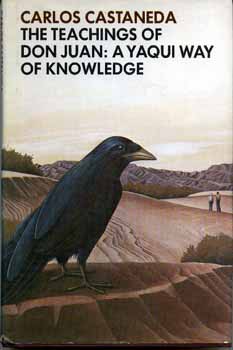
Back in the last night of the UP Fair 2011, I came across some people selling old books along the sidewalk in the campus. To my delight, I've found a copy of Carlos Castaneda's The Teachings of Don Juan: A Yaqui Way of Knowledge (1974 edition) among the books and it only costs 100 pesos. It's an account of the anthropologist Carlos Castaneda time as an apprentice under the Yaqui Indian brujo (sorcerer) Don Juan way back in the early 1960's. After a harrowing experience, Castaneda ceased his training, wrote a book about it and went back to continue his apprenticeship under Don Juan. It is a tale of sorcery, shamanic journeys and peyote.
Yeah sure it was heavily debated whether Carlos made the whole thing up or not but that book started the shamanism craze back in the 60's. In fact, anything mystical was a huge thing back in the 60's. Heck, Marvel Comics' Doctor Strange was created in the 60's.
Whether or not the experiences of Carlos Castaneda were fabricated, it matters not to me. Nothing is true, everything is permitted. If it works for me, yippee-kay yay. However, I don't need the use of hallucinogenic plants thanks to the use of certain trance-inducing techniques. Another thing that intrigued me was the use of lizards for information-gathering. The parts about sewing up their eyes and mouths sounds very iffy though.
Saturday, February 26, 2011
How Liko become Kaotiko
Thursday, February 24, 2011
Less of A Chaote, More of A Sorcerer
What's that you ask? Chaote? It's a short term for "chaos magician". It's rather difficult to define what chaos magic is. You could say that chaos magic is a tradition that is not a tradition. It is a system yet it's not a system. To describe chaos magic makes it less like chaos magic. However, a lot of chaotes can (or could) agree that it's an approach that is extremely practical and pragmatic. Whatever that works, stick to it. Chaotes have no use for namby-pamby dogma (unless dogma is part of the chaote's chosen paradigm) and ancient rituals too complex or too tedious to perform. Chaos magic is anything-goes-magic as long as it works.
Now why did I say that I'm becoming less of a Chaote and more of a sorcerer? You see, chaotes, especially the more hardcore ones, often shift paradigms depending on the situation. For a chaote, belief is a tool. Belief can either make you or break you. Unless it's part of the chaote's paradigm of the day, dogma is a no-no. Dogma can be an ugly thing for a chaote. A really hardcore chaote would go "like, ew! gross!" at the very mention of the word "dogma" as if it's a dirty word. However, I'm beginning to see the value in the use of dogma. I'm not talking about the dogma religious institutions often spout. I'm not talking about archaic doctrines that set us back thousands of years and hinder progress in society. No, I'm talking about what I would like to term constructive dogma. I realized that dogma, when used right, can be productive. You could say that the use of constructive dogma is part of my current paradigm.
Thursday, February 10, 2011
My Start in Magic

Magic is the use of a certain ritual action to bring about the intervention of a supernatural force, either in human affairs or in the natural environment, for a specific purpose. At least that's according to Geddes and Grosset's Dictionary of The Occult. Depending on the tradition and approach, magic (or magick as spelled by the Master Therion Aleister Crowley) have many definitions but hey whatever floats your boat. Magic has existed since ancient times. It varies in form from the primeval rites of the shamans to the elaborate ceremonies of high mages. However, this article is not about the general infortmation of magic. If you want to know more about magic, just Google or Wiki it. In the mean time, I'll tell you how I became a practitioner.
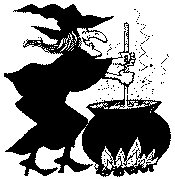
When I was a pre-adolescent lad, I've always been a paranormal geek. My main interests at that time were UFOs and psychism. The first thing that came to my mind when it comes to magic is cartoonish hags brewing weird concoctions in cauldrons.
Years later, I've come across chaos magic but that's another story for another time.